

Chapter 14 of 18 · 27 verses
गुणत्रयविभागयोगThe three gunas
Sattva, rajas and tamas — how each binds, and what it looks like to rise beyond them.
What shapes my clarity, restlessness and inertia?
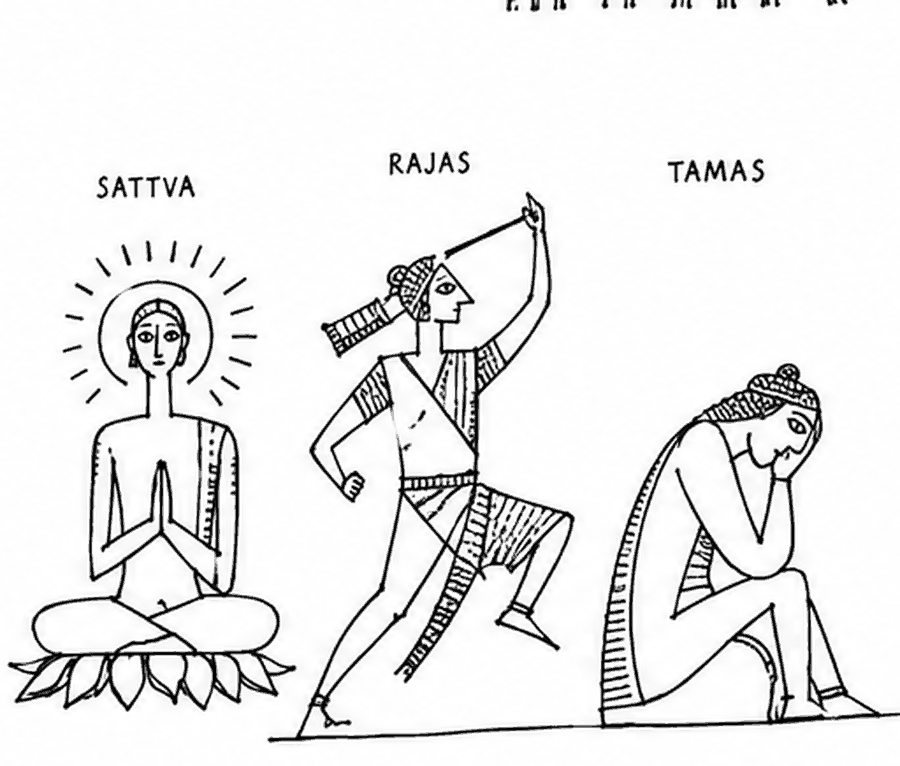
Three strands of nature itself — not three kinds of person. Sattva binds through attachment to happiness and knowledge, rajas through craving and action, tamas through negligence (14.6–8), and which one is uppermost keeps changing. That is the point: they are weather, not identity. Even clarity binds once it becomes a claim about who you are. Arjuna asks how someone beyond them behaves, and the answer is someone who neither resents their arrival nor waits for them to leave (14.22).
Read it with this in mindThe guṇas are not fixed personality labels for judging others. Even sattva binds when clarity becomes identity or superiority. Observation should create freedom and responsibility, not fatalism.
Hansi Gita Bhawan Trust · The Gita for Life

Where we are in the dialogue
Living with the Three Guṇas
Sattva, rajas and tamas arise from prakṛti and bind through attachment to happiness and knowledge, action and craving, or negligence and delusion. Their dominance changes. The person beyond the guṇas neither hates their arrival nor longs for their departure and remains established through unwavering devotion.
- Words to carry through
- sattva; rajas; tamas; changing states; bondage; witness; guṇātīta
14.1–5Knowledge of the gunasKrishna introduces the three qualities born of prakriti that bind the embodied self.
श्रीभगवानुवाचShri Bhagavan said
14.1परं भूयः प्रवक्ष्यामि ज्ञानानां ज्ञानमुत्तमम् ।
यज्ज्ञात्वा मुनयः सर्वे परां सिद्धिमितो गताः ॥paraṁ bhūyaḥ pravakṣyāmi jñānānāṁ jñānamuttamam / yajjñātvā munayaḥ sarve parāṁ siddhimito gatāḥ
I will speak again of the highest knowledge, the best of all that can be known — the knowledge by which all the sages went on from here to the highest perfection.
अब मैं फिर उस परम ज्ञान को कहूँगा, जो सब ज्ञानों में श्रेष्ठ है — जिसे जानकर सभी मुनि यहाँ से परम सिद्धि को प्राप्त हुए।
Trust’s themeGunas
- 14.2
इदं ज्ञानमुपाश्रित्य मम साधर्म्यमागताः ।
सर्गेऽपि नोपजायन्ते प्रलये न व्यथन्ति च ॥idaṁ jñānamupāśritya mama sādharmyamāgatāḥ / sarge’pi nopajāyante pralaye na vyathanti ca
Those who take their stand on this knowledge and come to share my own nature are not born again when creation begins, and are not shaken when it dissolves.
जो इस ज्ञान का आश्रय लेकर मेरे स्वभाव को प्राप्त कर लेते हैं, वे सृष्टि के समय फिर जन्म नहीं लेते और प्रलय के समय व्याकुल नहीं होते।
Trust’s themeGunas
- 14.3
मम योनिर्महद् ब्रह्म तस्मिन्गर्भं दधाम्यहम् ।
सम्भवः सर्वभूतानां ततो भवति भारत ॥mama yonirmahad brahma tasmingarbhaṁ dadhāmyaham / sambhavaḥ sarvabhūtānāṁ tato bhavati bhārata
My womb is the great Brahman, and it is there that I place the seed. From that, Bharata, the coming into being of all creatures follows.
मेरी योनि महद्-ब्रह्म है, और उसी में मैं गर्भ स्थापित करता हूँ। भारत, उसी से सब प्राणियों की उत्पत्ति होती है।
Trust’s themeGunas
- 14.4
सर्वयोनिषु कौन्तेय मूर्तयः सम्भवन्ति याः ।
तासां ब्रह्म महद्योनिरहं बीजप्रदः पिता ॥sarvayoniṣu kaunteya mūrtayaḥ sambhavanti yāḥ / tāsāṁ brahma mahadyonirahaṁ bījapradaḥ pitā
Kaunteya, whatever forms take shape in any womb at all, the great Brahman is the womb that holds them, and I am the father who gives the seed.
कौन्तेय, सब योनियों में जो भी रूप जन्म लेते हैं, उन सबको धारण करने वाली योनि महद्-ब्रह्म है, और बीज देने वाला पिता मैं हूँ।
Trust’s themeGunas
- 14.5
सत्त्वं रजस्तम इति गुणाः प्रकृतिसम्भवाः ।
निबध्नन्ति महाबाहो देहे देहिनमव्ययम् ॥sattvaṁ rajastama iti guṇāḥ prakṛtisambhavāḥ / nibadhnanti mahābāho dehe dehinamavyayam
Sattva, rajas and tamas — these are the gunas that arise out of prakriti. Mahabaho, they are what bind the unchanging dweller within to the body.
सत्त्व, रजस् और तमस् — ये गुण प्रकृति से उत्पन्न होते हैं। महाबाहो, ये ही भीतर बसे अविनाशी देही को शरीर में बाँध देते हैं।
Trust’s themeGunas
The gunas bind
Sattva, rajas and tamas arise from prakriti and bind the embodied self in different ways. The rest of the chapter explains how even comparatively luminous sattva can still bind.
Read deeper · Read with 14.6–9, 14.19–27, 17.1–22 and 18.19–39.
Hansi Gita Bhawan Trust · The Gita for Life
14.6–9How each guna bindsSattva through attachment to happiness/knowledge, rajas through action/desire, tamas through negligence/delusion.
14.6तत्र सत्त्वं निर्मलत्वात्प्रकाशकमनामयम् ।
सुखसङ्गेन बध्नाति ज्ञानसङ्गेन चानघ ॥tatra sattvaṁ nirmalatvātprakāśakamanāmayam / sukhasaṅgena badhnāti jñānasaṅgena cānagha
Among them sattva, being clear, gives light and is free of disturbance. Anagha, it binds a person through attachment to happiness and through attachment to knowledge.
इनमें सत्त्व निर्मल होने के कारण प्रकाश देता है और विकार से रहित है। अनघ, वह मनुष्य को सुख की आसक्ति से और ज्ञान की आसक्ति से बाँधता है।
Trust’s themeGunas
- 14.7
रजो रागात्मकं विद्धि तृष्णासङ्गसमुद्भवम् ।
तन्निबध्नाति कौन्तेय कर्मसङ्गेन देहिनम् ॥rajo rāgātmakaṁ viddhi tṛṣṇāsaṅgasamudbhavam / tannibadhnāti kaunteya karmasaṅgena dehinam
Know rajas to be of the nature of passion, arising out of thirst and attachment. Kaunteya, it binds the dweller in the body through attachment to action.
रजस् को राग रूप जानो, जो तृष्णा और आसक्ति से उत्पन्न होता है। कौन्तेय, वह देही को कर्म की आसक्ति से बाँध देता है।
Trust’s themeGunas
- 14.8
तमस्त्वज्ञानजं विद्धि मोहनं सर्वदेहिनाम् ।
प्रमादालस्यनिद्राभिस्तन्निबध्नाति भारत ॥tamastvajñānajaṁ viddhi mohanaṁ sarvadehinām / pramādālasyanidrābhistannibadhnāti bhārata
Know tamas to be born of ignorance; it confuses everyone who lives in a body. Bharata, it binds a person through carelessness, laziness and sleep.
तमस् को अज्ञान से उत्पन्न जानो; वह सब देहधारियों को मोह में डालता है। भारत, वह प्रमाद, आलस्य और नींद से मनुष्य को बाँधता है।
Trust’s themeGunas
- 14.9
सत्त्वं सुखे सञ्जयति रजः कर्मणि भारत ।
ज्ञानमावृत्य तु तमः प्रमादे सञ्जयत्युत ॥sattvaṁ sukhe sañjayati rajaḥ karmaṇi bhārata / jñānamāvṛtya tu tamaḥ pramāde sañjayatyuta
Sattva attaches a person to happiness, Bharata, and rajas attaches him to action. Tamas covers over knowledge and attaches him to carelessness instead.
भारत, सत्त्व मनुष्य को सुख में लगाता है और रजस् उसे कर्म में लगाता है। तमस् तो ज्ञान को ढककर उसे प्रमाद में लगा देता है।
Trust’s themeGunas
14.10–18Signs and consequencesThe gunas compete, dominate and produce recognizable patterns and destinations.
14.10रजस्तमश्चाभिभूय सत्त्वं भवति भारत ।
रजः सत्त्वं तमश्चैव तमः सत्त्वं रजस्तथा ॥rajastamaścābhibhūya sattvaṁ bhavati bhārata / rajaḥ sattvaṁ tamaścaiva tamaḥ sattvaṁ rajastathā
Sattva rises, Bharata, by overcoming rajas and tamas; rajas rises by overcoming sattva and tamas; and tamas rises by overcoming sattva and rajas.
भारत, रजस् और तमस् को दबाकर सत्त्व बढ़ता है; सत्त्व और तमस् को दबाकर रजस् बढ़ता है; और सत्त्व तथा रजस् को दबाकर तमस् बढ़ता है।
Trust’s themeGunas
- 14.11
सर्वद्वारेषु देहेऽस्मिन्प्रकाश उपजायते ।
ज्ञानं यदा तदा विद्याद्विवृद्धं सत्त्वमित्युत ॥sarvadvāreṣu dehe’sminprakāśa upajāyate / jñānaṁ yadā tadā vidyādvivṛddhaṁ sattvamityuta
When light, which is knowledge, appears at every gate of this body, then one should understand that sattva has grown strong in that person.
जब इस शरीर के सब द्वारों पर प्रकाश, अर्थात् ज्ञान, प्रकट होता है, तब जानना चाहिए कि उस मनुष्य में सत्त्व बढ़ा हुआ है।
Trust’s themeGunas
- 14.12
लोभः प्रवृत्तिरारम्भः कर्मणामशमः स्पृहा ।
रजस्येतानि जायन्ते विवृद्धे भरतर्षभ ॥lobhaḥ pravṛttirārambhaḥ karmaṇāmaśamaḥ spṛhā / rajasyetāni jāyante vivṛddhe bharatarṣabha
Greed, restless activity, the starting of new undertakings, an inability to settle, and craving — these appear, best of the Bharatas, when rajas has grown strong.
लोभ, बेचैन प्रवृत्ति, नए-नए कामों का आरंभ, अशांति और स्पृहा — भरतश्रेष्ठ, रजस् के बढ़ने पर ये सब उत्पन्न होते हैं।
Trust’s themeGunas
- 14.13
अप्रकाशोऽप्रवृत्तिश्च प्रमादो मोह एव च ।
तमस्येतानि जायन्ते विवृद्धे कुरुनन्दन ॥aprakāśo’pravṛttiśca pramādo moha eva ca / tamasyetāni jāyante vivṛddhe kurunandana
An absence of light, an absence of effort, carelessness and confusion — these are what appear, Kurunandana, when tamas has grown strong in a person.
प्रकाश का अभाव, प्रयत्न का अभाव, प्रमाद और मोह — कुरुनन्दन, तमस् के बढ़ने पर मनुष्य में ये ही उत्पन्न होते हैं।
Trust’s themeGunas
- 14.14
यदा सत्त्वे प्रवृद्धे तु प्रलयं याति देहभृत् ।
तदोत्तमविदां लोकानमलान्प्रतिपद्यते ॥yadā sattve pravṛddhe tu pralayaṁ yāti dehabhṛt / tadottamavidāṁ lokānamalānpratipadyate
When one who carries a body dies at a time when sattva has grown strong, that person reaches the spotless worlds of those who know the highest.
जब सत्त्व के बढ़े हुए रहते हुए देहधारी की मृत्यु होती है, तब वह उन लोगों के निर्मल लोकों को प्राप्त करता है जो सर्वोत्तम को जानते हैं।
Trust’s themeGunas
- 14.15
रजसि प्रलयं गत्वा कर्मसङ्गिषु जायते ।
तथा प्रलीनस्तमसि मूढयोनिषु जायते ॥rajasi pralayaṁ gatvā karmasaṅgiṣu jāyate / tathā pralīnastamasi mūḍhayoniṣu jāyate
One who dies when rajas is dominant is born among people attached to action. One who dies when tamas is dominant is born in the wombs of the deluded.
जो रजस् के प्रबल रहते मरता है, वह कर्म में आसक्त लोगों के बीच जन्म लेता है। और जो तमस् के प्रबल रहते मरता है, वह मूढ़ योनियों में जन्म लेता है।
Trust’s themeGunas
- 14.16
कर्मणः सुकृतस्याहुः सात्त्विकं निर्मलं फलम् ।
रजसस्तु फलं दुःखमज्ञानं तमसः फलम् ॥karmaṇaḥ sukṛtasyāhuḥ sāttvikaṁ nirmalaṁ phalam / rajasastu phalaṁ duḥkhamajñānaṁ tamasaḥ phalam
The fruit of well-done action, they say, belongs to sattva and is clean. The fruit of rajas is pain, and the fruit of tamas is ignorance.
कहा जाता है कि भली प्रकार किए गए कर्म का फल सात्त्विक और निर्मल होता है। रजस् का फल दुःख है, और तमस् का फल अज्ञान है।
Trust’s themeGunas
- 14.17
सत्त्वात्सञ्जायते ज्ञानं रजसो लोभ एव च ।
प्रमादमोहौ तमसो भवतोऽज्ञानमेव च ॥sattvātsañjāyate jñānaṁ rajaso lobha eva ca / pramādamohau tamaso bhavato’jñānameva ca
From sattva knowledge is born, and from rajas greed is born. From tamas come carelessness and confusion, and ignorance comes from it as well.
सत्त्व से ज्ञान उत्पन्न होता है और रजस् से लोभ। तमस् से प्रमाद और मोह उत्पन्न होते हैं, और अज्ञान भी उसी से होता है।
Trust’s themeGunas
- 14.18
ऊर्ध्वं गच्छन्ति सत्त्वस्था मध्ये तिष्ठन्ति राजसाः ।
जघन्यगुणवृत्तिस्था अधो गच्छन्ति तामसाः ॥ūrdhvaṁ gacchanti sattvasthā madhye tiṣṭhanti rājasāḥ / jaghanyaguṇavṛttisthā adho gacchanti tāmasāḥ
Those settled in sattva go upward. Those of rajas stay in the middle. Those of tamas, who live in the working of the lowest guna, go downward.
सत्त्व में स्थित लोग ऊपर जाते हैं। राजस लोग बीच में रहते हैं। और तामस लोग, जो सबसे नीचे के गुण की वृत्ति में रहते हैं, नीचे जाते हैं।
Trust’s themeGunas
14.19–20Seeing beyond the gunasFreedom grows by seeing the gunas as agents rather than the whole Self.
14.19नान्यं गुणेभ्यः कर्तारं यदा द्रष्टानुपश्यति ।
गुणेभ्यश्च परं वेत्ति मद्भावं सोऽधिगच्छति ॥nānyaṁ guṇebhyaḥ kartāraṁ yadā draṣṭānupaśyati / guṇebhyaśca paraṁ vetti madbhāvaṁ so’dhigacchati
When the one who watches sees that there is no doer other than the gunas, and knows what lies beyond the gunas, that person comes to share in my being.
जब देखने वाला यह देख लेता है कि गुणों के सिवा कोई कर्ता नहीं है, और गुणों से परे जो है उसे भी जान लेता है, तब वह मेरे भाव को प्राप्त होता है।
Trust’s themeWitness
- 14.20
गुणानेतानतीत्य त्रीन्देही देहसमुद्भवान् ।
जन्ममृत्युजरादुःखैर्विमुक्तोऽमृतमश्नुते ॥guṇānetānatītya trīndehī dehasamudbhavān / janmamṛtyujarāduḥkhairvimukto’mṛtamaśnute
When the dweller in the body passes beyond these three gunas, which come into being along with the body, he is freed from birth, death, old age and pain, and reaches the deathless.
जब देही इन तीनों गुणों को पार कर जाता है, जो शरीर के साथ ही उत्पन्न होते हैं, तब वह जन्म, मृत्यु, बुढ़ापे और दुःख से मुक्त होकर अमृत को प्राप्त करता है।
Trust’s themeWitness
14.21–27The gunatita and bhaktiArjuna asks for signs and practice; equanimity culminates in unwavering devotion.
अर्जुन उवाचArjuna said
14.21कैर्लिङ्गैस्त्रीन्गुणानेतानतीतो भवति प्रभो ।
किमाचारः कथं चैतांस्त्रीन्गुणानतिवर्तते ॥kairliṅgaistrīnguṇānetānatīto bhavati prabho / kimācāraḥ kathaṁ caitāṁstrīnguṇānativartate
By what marks is a person known to have passed beyond these three gunas, Prabhu? How does such a person behave, and how does he get past these three gunas?
प्रभो, किन लक्षणों से यह जाना जाता है कि कोई इन तीनों गुणों को पार कर चुका है? ऐसे मनुष्य का आचरण कैसा होता है, और वह इन तीनों गुणों को किस तरह पार करता है?
Trust’s themeBhakti
श्रीभगवानुवाचShri Bhagavan said
14.22प्रकाशं च प्रवृत्तिं च मोहमेव च पाण्डव ।
न द्वेष्टि सम्प्रवृत्तानि न निवृत्तानि काङ्क्षति ॥prakāśaṁ ca pravṛttiṁ ca mohameva ca pāṇḍava / na dveṣṭi sampravṛttāni na nivṛttāni kāṅkṣati
Pandava, he does not dislike light, activity or confusion when they come upon him, and he does not long for them when they fall away.
पांडव, प्रकाश, प्रवृत्ति और मोह — ये जब उस पर आ पड़ते हैं तब वह इनसे द्वेष नहीं करता, और जब ये हट जाते हैं तब इनकी चाह नहीं करता।
Trust’s themeBhakti
- 14.23
उदासीनवदासीनो गुणैर्यो न विचाल्यते ।
गुणा वर्तन्त इत्येवं योऽवतिष्ठति नेङ्गते ॥udāsīnavadāsīno guṇairyo na vicālyate / guṇā vartanta ityevaṁ yo’vatiṣṭhati neṅgate
He sits like someone who stands apart, and the gunas do not unsettle him. Knowing only that the gunas are doing their work, he stays as he is and does not waver.
वह उदासीन की तरह बैठा रहता है और गुण उसे विचलित नहीं करते। गुण अपना काम कर रहे हैं — यही जानकर वह अपनी जगह स्थिर रहता है और डिगता नहीं।
Trust’s themeBhakti
- 14.24
समदुःखसुखः स्वस्थः समलोष्टाश्मकाञ्चनः ।
तुल्यप्रियाप्रियो धीरस्तुल्यनिन्दात्मसंस्तुतिः ॥samaduḥkhasukhaḥ svasthaḥ samaloṣṭāśmakāñcanaḥ / tulyapriyāpriyo dhīrastulyanindātmasaṁstutiḥ
Pain and pleasure are the same to him, and he rests in himself. Clay, stone and gold are alike to him. Steady, he takes the pleasant and the unpleasant alike, and blame and praise of himself alike.
उसके लिए दुःख और सुख समान हैं, और वह अपने में टिका रहता है। मिट्टी, पत्थर और सोना उसके लिए एक जैसे हैं। धीर होकर वह प्रिय और अप्रिय को, तथा अपनी निन्दा और अपनी स्तुति को समान मानता है।
Trust’s themeBhakti
- 14.25
मानापमानयोस्तुल्यस्तुल्यो मित्रारिपक्षयोः ।
सर्वारम्भपरित्यागी गुणातीतः स उच्यते ॥mānāpamānayostulyastulyo mitrāripakṣayoḥ / sarvārambhaparityāgī guṇātītaḥ sa ucyate
He is the same in honour and in dishonour, the same towards a friend’s side and an enemy’s side, and he gives up starting things for himself. Such a person is called one who has gone beyond the gunas.
वह मान और अपमान में समान रहता है, मित्र के पक्ष और शत्रु के पक्ष में समान रहता है, और अपने लिए कोई काम आरंभ करना छोड़ देता है। ऐसे मनुष्य को गुणातीत कहा जाता है।
Trust’s themeBhakti
- 14.26
मां च योऽव्यभिचारेण भक्तियोगेन सेवते ।
स गुणान्समतीत्यैतान्ब्रह्मभूयाय कल्पते ॥māṁ ca yo’vyabhicāreṇa bhaktiyogena sevate / sa guṇānsamatītyaitānbrahmabhūyāya kalpate
And whoever serves me through the yoga of devotion, without ever wavering, passes right beyond these gunas and becomes fit to be one with Brahman.
और जो कभी न डिगने वाले भक्तियोग से मेरी सेवा करता है, वह इन गुणों को पूरी तरह पार करके ब्रह्म के साथ एक होने के योग्य हो जाता है।
Trust’s themeBhakti
- 14.27
ब्रह्मणो हि प्रतिष्ठाहममृतस्याव्ययस्य च ।
शाश्वतस्य च धर्मस्य सुखस्यैकान्तिकस्य च ॥brahmaṇo hi pratiṣṭhāhamamṛtasyāvyayasya ca / śāśvatasya ca dharmasya sukhasyaikāntikasya ca
For I am the ground on which Brahman rests — Brahman that is deathless and never wears away — and the ground of the eternal dharma and of happiness that is complete.
क्योंकि उस ब्रह्म का आधार मैं ही हूँ, जो अमृत है और अव्यय है, तथा शाश्वत धर्म का और एकान्तिक सुख का आधार भी मैं ही हूँ।
Trust’s themeBhakti
THE HUMAN QUESTION
Where is my deepest belonging in a changing world?
Hansi Gita Bhawan Trust · The Gita for Life
Sanskrit transcribed from published texts and cross-checked verse by verse; transliteration generated from the Devanagari. The English and Hindi renderings are the Trust’s own.
Questions readers ask
About chapter 14.
Is sattva always good?
It supports clarity, yet attachment to its happiness and knowledge still binds.
Can guṇas change?
Yes. The chapter describes shifting dominance, not permanent castes of personality.
What is guṇātīta?
One who sees the guṇas operating without hatred or craving and rests in devotion.
Reflect and practise
One thing to do.
For one week, note when clarity, agitation and inertia dominate. Change sleep, input or action where possible; do not turn the record into self-condemnation.
Continue the journey — Read guṇa agency with 3.27–29 and its ethical detail in 17–18.
The eighteen chapters
Where to go next