

Chapter 3 of 18 · 43 verses
कर्मयोगThe yoga of action
No one can remain without acting. Work done as offering, for the holding-together of the world.
How can I act fully without becoming bound by results?
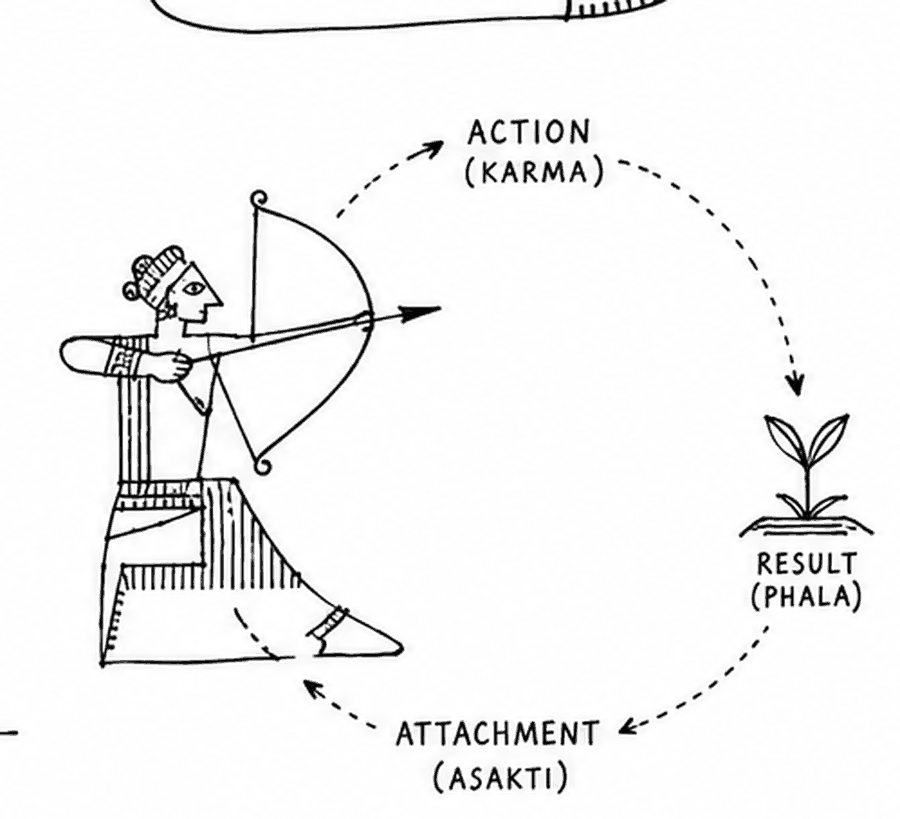
By making the act an offering rather than a purchase. No embodied person can stop acting (3.5), so the question is never whether to act but on what terms. Work done as yajña — given, not traded — and done for loka-saṅgraha, the holding-together of the world, does not bind (3.9, 3.20). What binds is private grasping, and at the chapter’s end Krishna names its root: desire, and the anger that comes out of it (3.37).
Read it with this in mindExcellence and non-attachment belong together. A leader’s conduct teaches beyond words. “My own duty” is not permission to ignore harm; it asks for honest responsibility shaped by nature, role, competence and moral discernment.
Hansi Gita Bhawan Trust · The Gita for Life

Where we are in the dialogue
Action as Offering
Arjuna hears a contradiction between knowledge and action. Krishna answers that no embodied person remains inactive. Action becomes liberating when offered as yajña, performed without private grasping and directed toward loka-saṅgraha—the holding together of the world. Desire and anger are then named as the inner enemy.
- Words to carry through
- necessary action; yajña; loka-saṅgraha; leadership; guṇas and agency; desire and anger
- Threads running through it
- KarmaYajnaLeadershipGunasDesire
3.1–9Why act?Arjuna sees tension between knowledge and action; Krishna denies that mere non-action is freedom.
अर्जुन उवाचArjuna said
3.1ज्यायसी चेत्कर्मणस्ते मता बुद्धिर्जनार्दन ।
तत्किं कर्मणि घोरे मां नियोजयसि केशव ॥jyāyasī cetkarmaṇaste matā buddhirjanārdana / tatkiṁ karmaṇi ghore māṁ niyojayasi keśava
If you consider understanding to be better than action, Janardana, then why do you push me into this terrible work, Keshava?
यदि आप कर्म से बुद्धि को श्रेष्ठ मानते हैं, जनार्दन, तो फिर मुझे इस भयानक कर्म में क्यों लगा रहे हैं, केशव?
Trust’s themeKarma
- 3.2
व्यामिश्रेणेव वाक्येन बुद्धिं मोहयसीव मे ।
तदेकं वद निश्चित्य येन श्रेयोऽहमाप्नुयाम् ॥vyāmiśreṇeva vākyena buddhiṁ mohayasīva me / tadekaṁ vada niścitya yena śreyo’hamāpnuyām
Your words seem mixed, and they leave my understanding confused. Decide, and tell me the one thing by which I may reach what is best.
आपके वचन मिले-जुले से लगते हैं और मेरी बुद्धि को भ्रमित कर देते हैं। निश्चय करके मुझे वह एक बात बताइए जिससे मैं श्रेय को प्राप्त कर सकूँ।
Trust’s themeKarma
श्रीभगवानुवाचShri Bhagavan said
3.3लोकेऽस्मिन्द्विविधा निष्ठा पुरा प्रोक्ता मयानघ ।
ज्ञानयोगेन साङ्ख्यानां कर्मयोगेन योगिनाम् ॥loke’smindvividhā niṣṭhā purā proktā mayānagha / jñānayogena sāṅkhyānāṁ karmayogena yoginām
In this world there are two paths of steady practice, Anagha, which I taught long ago: the yoga of knowledge for those of the Sankhya way, and the yoga of action for yogis.
इस संसार में दो प्रकार की निष्ठा मैंने पहले कही थी, अनघ — सांख्य वालों के लिए ज्ञानयोग और योगियों के लिए कर्मयोग।
Trust’s themeKarma
- 3.4
न कर्मणामनारम्भान्नैष्कर्म्यं पुरुषोऽश्नुते ।
न च संन्यसनादेव सिद्धिं समधिगच्छति ॥na karmaṇāmanārambhānnaiṣkarmyaṁ puruṣo’śnute / na ca saṁnyasanādeva siddhiṁ samadhigacchati
A person does not reach freedom from action simply by not beginning any work, and no one attains perfection merely by renouncing what he has taken up.
कर्म आरंभ न करने मात्र से मनुष्य नैष्कर्म्य को नहीं पाता, और केवल त्याग कर देने से भी वह सिद्धि तक नहीं पहुँचता।
Trust’s themeKarma
- 3.5
न हि कश्चित्क्षणमपि जातु तिष्ठत्यकर्मकृत् ।
कार्यते ह्यवशः कर्म सर्वः प्रकृतिजैर्गुणैः ॥na hi kaścitkṣaṇamapi jātu tiṣṭhatyakarmakṛt / kāryate hyavaśaḥ karma sarvaḥ prakṛtijairguṇaiḥ
No one can stay even for a moment without doing something. Everyone is made to act, helplessly, by the gunas that arise from their own nature.
कोई भी एक क्षण के लिए भी बिना कर्म किए नहीं रह सकता। प्रकृति से उत्पन्न गुण हर किसी से विवश होकर कर्म करवाते हैं।
Trust’s themeKarma
- 3.6
कर्मेन्द्रियाणि संयम्य य आस्ते मनसा स्मरन् ।
इन्द्रियार्थान्विमूढात्मा मिथ्याचारः स उच्यते ॥karmendriyāṇi saṁyamya ya āste manasā smaran / indriyārthānvimūḍhātmā mithyācāraḥ sa ucyate
The man who holds his organs of action still while his mind keeps dwelling on the objects of the senses is deluded, and he is called a hypocrite.
जो अपनी कर्मेन्द्रियों को रोककर बैठ जाता है, पर मन में विषयों का स्मरण करता रहता है, वह मूढ़ है और मिथ्याचारी कहलाता है।
Trust’s themeKarma
- 3.7
यस्त्विन्द्रियाणि मनसा नियम्यारभतेऽर्जुन ।
कर्मेन्द्रियैः कर्मयोगमसक्तः स विशिष्यते ॥yastvindriyāṇi manasā niyamyārabhate’rjuna / karmendriyaiḥ karmayogamasaktaḥ sa viśiṣyate
But the one who controls the senses with the mind, Arjuna, and begins karma yoga with the organs of action, unattached, stands far above him.
पर अर्जुन, जो मन से इन्द्रियों को वश में करके, अनासक्त भाव से कर्मेन्द्रियों द्वारा कर्मयोग आरंभ करता है, वही श्रेष्ठ है।
Trust’s themeKarma
- 3.8
नियतं कुरु कर्म त्वं कर्म ज्यायो ह्यकर्मणः ।
शरीरयात्रापि च ते न प्रसिद्ध्येदकर्मणः ॥niyataṁ kuru karma tvaṁ karma jyāyo hyakarmaṇaḥ / śarīrayātrāpi ca te na prasiddhyedakarmaṇaḥ
Do the work that is laid down for you, for action is better than inaction. Without action you could not even keep your own body going.
तुम अपने नियत कर्म को करो, क्योंकि कर्म अकर्म से श्रेष्ठ है। कर्म के बिना तो तुम्हारे शरीर का निर्वाह भी न हो सकेगा।
Read underKarma YogaTrust’s themeKarma
- 3.9
यज्ञार्थात्कर्मणोऽन्यत्र लोकोऽयं कर्मबन्धनः ।
तदर्थं कर्म कौन्तेय मुक्तसङ्गः समाचर ॥yajñārthātkarmaṇo’nyatra loko’yaṁ karmabandhanaḥ / tadarthaṁ karma kaunteya muktasaṅgaḥ samācara
Work done for the sake of yajna does not bind; all other work keeps this world in bondage. So do your work for that purpose, Kaunteya, free of attachment.
यज्ञ के लिए किए गए कर्म के अतिरिक्त बाकी सब कर्म इस संसार को बाँधते हैं। इसलिए कौन्तेय, आसक्ति छोड़कर यज्ञ के लिए ही कर्म करो।
Trust’s themeKarma
3.10–16Yajna and reciprocityAction is placed inside a larger order of offering, reciprocity and sustenance.
3.10सहयज्ञाः प्रजाः सृष्ट्वा पुरोवाच प्रजापतिः ।
अनेन प्रसविष्यध्वमेष वोऽस्त्विष्टकामधुक् ॥sahayajñāḥ prajāḥ sṛṣṭvā purovāca prajāpatiḥ / anena prasaviṣyadhvameṣa vo’stviṣṭakāmadhuk
Long ago Prajapati created people together with yajna and said: by this you shall increase, and let this be the cow that yields all you wish for.
सृष्टि के आरंभ में प्रजापति ने यज्ञ के साथ प्रजा को रचकर कहा — इसी से तुम बढ़ो, यही तुम्हारी इच्छाएँ पूरी करने वाली कामधेनु हो।
Trust’s themeYajna
- 3.11
देवान्भावयतानेन ते देवा भावयन्तु वः ।
परस्परं भावयन्तः श्रेयः परमवाप्स्यथ ॥devānbhāvayatānena te devā bhāvayantu vaḥ / parasparaṁ bhāvayantaḥ śreyaḥ paramavāpsyatha
By this you shall sustain the gods, and let the gods sustain you. Sustaining one another in this way, you will reach the highest good.
इससे तुम देवताओं को पुष्ट करो और देवता तुम्हें पुष्ट करें। इस तरह एक-दूसरे को पुष्ट करते हुए तुम परम श्रेय को प्राप्त करोगे।
Trust’s themeYajna
- 3.12
इष्टान्भोगान्हि वो देवा दास्यन्ते यज्ञभाविताः ।
तैर्दत्तानप्रदायैभ्यो यो भुङ्क्ते स्तेन एव सः ॥iṣṭānbhogānhi vo devā dāsyante yajñabhāvitāḥ / tairdattānapradāyaibhyo yo bhuṅkte stena eva saḥ
Nourished by yajna, the gods will give you the enjoyments you want. But whoever enjoys what they give without offering anything back to them is simply a thief.
यज्ञ से पुष्ट हुए देवता तुम्हें मनचाहे भोग देंगे। जो उनके दिए हुए को उन्हें दिए बिना ही भोगता है, वह चोर ही है।
Trust’s themeYajna
- 3.13
यज्ञशिष्टाशिनः सन्तो मुच्यन्ते सर्वकिल्बिषैः ।
भुञ्जते ते त्वघं पापा ये पचन्त्यात्मकारणात् ॥yajñaśiṣṭāśinaḥ santo mucyante sarvakilbiṣaiḥ / bhuñjate te tvaghaṁ pāpā ye pacantyātmakāraṇāt
Good people who eat what is left over from yajna are released from every fault. Those who cook only for themselves eat, and what they eat is wrongdoing.
जो सज्जन यज्ञ से बचे हुए अन्न को खाते हैं, वे सब दोषों से मुक्त हो जाते हैं। जो केवल अपने लिए पकाते हैं, वे पाप ही खाते हैं।
Trust’s themeYajna
- 3.14
अन्नाद्भवन्ति भूतानि पर्जन्यादन्नसम्भवः ।
यज्ञाद्भवति पर्जन्यो यज्ञः कर्मसमुद्भवः ॥annādbhavanti bhūtāni parjanyādannasambhavaḥ / yajñādbhavati parjanyo yajñaḥ karmasamudbhavaḥ
Living beings come into being from food, and food itself comes from rain. Rain comes from yajna, and yajna arises out of action.
प्राणी अन्न से उत्पन्न होते हैं और अन्न वर्षा से होता है। वर्षा यज्ञ से होती है, और यज्ञ कर्म से उत्पन्न होता है।
Trust’s themeYajna
- 3.15
कर्म ब्रह्मोद्भवं विद्धि ब्रह्माक्षरसमुद्भवम् ।
तस्मात्सर्वगतं ब्रह्म नित्यं यज्ञे प्रतिष्ठितम् ॥karma brahmodbhavaṁ viddhi brahmākṣarasamudbhavam / tasmātsarvagataṁ brahma nityaṁ yajñe pratiṣṭhitam
Know that action arises from Brahman, and Brahman arises from the imperishable. Therefore Brahman, which is present everywhere, is always established in yajna.
जानो कि कर्म ब्रह्म से उत्पन्न होता है और ब्रह्म अक्षर से। इसीलिए सर्वव्यापी ब्रह्म सदा यज्ञ में प्रतिष्ठित रहता है।
Trust’s themeYajna
- 3.16
एवं प्रवर्तितं चक्रं नानुवर्तयतीह यः ।
अघायुरिन्द्रियारामो मोघं पार्थ स जीवति ॥evaṁ pravartitaṁ cakraṁ nānuvartayatīha yaḥ / aghāyurindriyārāmo moghaṁ pārtha sa jīvati
Whoever does not keep this turning wheel going lives a life of wrongdoing, delighting only in the senses. Such a man lives in vain, Partha.
जो इस चलते हुए चक्र का अनुसरण नहीं करता, वह पापमय जीवन जीता है और इन्द्रियों में ही रमा रहता है। पार्थ, उसका जीना व्यर्थ है।
Trust’s themeYajna
3.17–26Action without private dependenceThe wise act without selfish dependence, including for loka-sangraha and example.
3.17यस्त्वात्मरतिरेव स्यादात्मतृप्तश्च मानवः ।
आत्मन्येव च सन्तुष्टस्तस्य कार्यं न विद्यते ॥yastvātmaratireva syādātmatṛptaśca mānavaḥ / ātmanyeva ca santuṣṭastasya kāryaṁ na vidyate
But for the person who delights in the self, who is satisfied by the self and content within the self alone, there is nothing left that must be done.
पर जो मनुष्य आत्मा में ही रमता है, आत्मा से ही तृप्त है और आत्मा में ही सन्तुष्ट है, उसके लिए कोई कर्तव्य शेष नहीं रहता।
Trust’s themeLeadership
- 3.18
नैव तस्य कृतेनार्थो नाकृतेनेह कश्चन ।
न चास्य सर्वभूतेषु कश्चिदर्थव्यपाश्रयः ॥naiva tasya kṛtenārtho nākṛteneha kaścana / na cāsya sarvabhūteṣu kaścidarthavyapāśrayaḥ
He gains nothing here by acting and loses nothing by not acting. Nor does he depend on any being anywhere for any purpose of his own.
उसे न कुछ करने से कोई प्रयोजन रहता है, न न करने से। और न ही किसी प्राणी पर उसका कोई स्वार्थ टिका रहता है।
Trust’s themeLeadership
- 3.19
तस्मादसक्तः सततं कार्यं कर्म समाचर ।
असक्तो ह्याचरन्कर्म परमाप्नोति पूरुषः ॥tasmādasaktaḥ satataṁ kāryaṁ karma samācara / asakto hyācarankarma paramāpnoti pūruṣaḥ
So do the work that must be done, always, without attachment. Acting without attachment, a person reaches what is highest.
इसलिए आसक्ति छोड़कर सदा वही कर्म करो जो करना चाहिए। आसक्ति के बिना कर्म करता हुआ मनुष्य परम पद को प्राप्त कर लेता है।
Read underKarma YogaTrust’s themeLeadership
- 3.20
कर्मणैव हि संसिद्धिमास्थिता जनकादयः ।
लोकसङ्ग्रहमेवापि सम्पश्यन्कर्तुमर्हसि ॥karmaṇaiva hi saṁsiddhimāsthitā janakādayaḥ / lokasaṅgrahamevāpi sampaśyankartumarhasi
Janaka and others reached perfection through action alone. You too should act, keeping lokasangraha, the holding together of the world, in view.
जनक जैसे लोगों ने कर्म से ही सिद्धि पाई थी। तुम्हें भी लोकसंग्रह को ध्यान में रखते हुए कर्म करना चाहिए।
Trust’s themeLeadership
- 3.21
यद्यदाचरति श्रेष्ठस्तत्तदेवेतरो जनः ।
स यत्प्रमाणं कुरुते लोकस्तदनुवर्तते ॥yadyadācarati śreṣṭhastattadevetaro janaḥ / sa yatpramāṇaṁ kurute lokastadanuvartate
Whatever a great man does, other people do the same. Whatever standard he sets by his own conduct, the world follows it.
श्रेष्ठ पुरुष जो-जो करता है, दूसरे लोग भी वही करते हैं। वह जिसे प्रमाण मान लेता है, संसार उसी के पीछे चलता है।
Trust’s themeLeadership
Conduct teaches
The conduct of a respected person shapes what others take as normal. This is not celebrity worship; it is an ethical warning about example and social imitation.
Read deeper · Read with 3.22–26, 16.1–3 and 18.63.
Hansi Gita Bhawan Trust · The Gita for Life
- 3.22
न मे पार्थास्ति कर्तव्यं त्रिषु लोकेषु किञ्चन ।
नानवाप्तमवाप्तव्यं वर्त एव च कर्मणि ॥na me pārthāsti kartavyaṁ triṣu lokeṣu kiñcana / nānavāptamavāptavyaṁ varta eva ca karmaṇi
There is nothing in the three worlds that I must do, Partha, nothing unattained that I need to attain. And still I remain engaged in action.
पार्थ, तीनों लोकों में मेरे लिए कुछ भी करणीय नहीं है, न कुछ ऐसा है जो अप्राप्त हो और पाना हो। फिर भी मैं कर्म में लगा रहता हूँ।
Trust’s themeLeadership
- 3.23
यदि ह्यहं न वर्तेयं जातु कर्मण्यतन्द्रितः ।
मम वर्त्मानुवर्तन्ते मनुष्याः पार्थ सर्वशः ॥yadi hyahaṁ na varteyaṁ jātu karmaṇyatandritaḥ / mama vartmānuvartante manuṣyāḥ pārtha sarvaśaḥ
For if I did not remain engaged in action, tireless as I am, then people everywhere would follow the path I set, Partha.
पार्थ, यदि मैं कभी आलस्य छोड़कर कर्म में न लगा रहूँ, तो मनुष्य सब प्रकार से मेरे ही मार्ग का अनुसरण करने लगेंगे।
Trust’s themeLeadership
- 3.24
उत्सीदेयुरिमे लोका न कुर्यां कर्म चेदहम् ।
सङ्करस्य च कर्ता स्यामुपहन्यामिमाः प्रजाः ॥utsīdeyurime lokā na kuryāṁ karma cedaham / saṅkarasya ca kartā syāmupahanyāmimāḥ prajāḥ
If I did not act, these worlds would fall apart. I would be the cause of confusion and would destroy these people.
यदि मैं कर्म न करूँ तो ये सब लोक नष्ट हो जाएँ। मैं ही संकर का कारण बनूँगा और इन प्रजाओं का नाश कर दूँगा।
Trust’s themeLeadership
- 3.25
सक्ताः कर्मण्यविद्वांसो यथा कुर्वन्ति भारत ।
कुर्याद्विद्वांस्तथासक्तश्चिकीर्षुर्लोकसङ्ग्रहम् ॥saktāḥ karmaṇyavidvāṁso yathā kurvanti bhārata / kuryādvidvāṁstathāsaktaścikīrṣurlokasaṅgraham
As the ignorant act with attachment to their work, Bharata, so should the wise act without attachment, wanting only lokasangraha, the holding together of the world.
भारत, जैसे अज्ञानी लोग कर्म में आसक्त होकर काम करते हैं, वैसे ही ज्ञानी को अनासक्त रहकर, लोकसंग्रह की इच्छा से कर्म करना चाहिए।
Trust’s themeLeadership
- 3.26
न बुद्धिभेदं जनयेदज्ञानां कर्मसङ्गिनाम् ।
जोषयेत्सर्वकर्माणि विद्वान्युक्तः समाचरन् ॥na buddhibhedaṁ janayedajñānāṁ karmasaṅginām / joṣayetsarvakarmāṇi vidvānyuktaḥ samācaran
The wise man should not unsettle the minds of the ignorant who are attached to their work. Acting with steadiness himself, he should let them enjoy all their duties.
ज्ञानी को कर्म में आसक्त अज्ञानियों की बुद्धि में भेद नहीं डालना चाहिए। स्वयं स्थिर होकर कर्म करता हुआ वह उन्हें सब कर्मों में लगाए रखे।
Trust’s themeLeadership
3.27–35Prakriti, doership and discernmentThe gunas complicate egoic doership; the wise should not unsettle those still attached.
3.27प्रकृतेः क्रियमाणानि गुणैः कर्माणि सर्वशः ।
अहङ्कारविमूढात्मा कर्ताहमिति मन्यते ॥prakṛteḥ kriyamāṇāni guṇaiḥ karmāṇi sarvaśaḥ / ahaṅkāravimūḍhātmā kartāhamiti manyate
Actions are carried out, in every case, by the gunas of nature. But a man whose mind is clouded by ego thinks that he himself is the one doing them.
सारे कर्म प्रकृति के गुणों द्वारा ही किए जाते हैं। पर अहंकार से मोहित मनुष्य मान लेता है कि करने वाला मैं हूँ।
Trust’s themeGunas
The ego and doership
The verse attributes action to the gunas of prakriti while the ego-deluded person says “I am the doer.” Traditions differ in metaphysical framing, but the verse decisively questions simplistic sole authorship.
Read deeper · Read with 5.8–9, 13.20–23, 14.19 and 18.13–17.
Hansi Gita Bhawan Trust · The Gita for Life
- 3.28
तत्त्ववित्तु महाबाहो गुणकर्मविभागयोः ।
गुणा गुणेषु वर्तन्त इति मत्वा न सज्जते ॥tattvavittu mahābāho guṇakarmavibhāgayoḥ / guṇā guṇeṣu vartanta iti matvā na sajjate
But the one who knows the truth about how the gunas and actions are divided, Mahabaho, understands that the gunas simply act upon the gunas, and he does not get attached.
पर महाबाहो, जो गुण और कर्म के विभाग का तत्त्व जानता है, वह समझता है कि गुण ही गुणों में बरत रहे हैं, और आसक्त नहीं होता।
Trust’s themeGunas
- 3.29
प्रकृतेर्गुणसम्मूढाः सज्जन्ते गुणकर्मसु ।
तानकृत्स्नविदो मन्दान्कृत्स्नविन्न विचालयेत् ॥prakṛterguṇasammūḍhāḥ sajjante guṇakarmasu / tānakṛtsnavido mandānkṛtsnavinna vicālayet
Those confused by the gunas of nature become attached to the work the gunas do. The one who sees the whole should not unsettle these slower people who see only a part.
प्रकृति के गुणों से मोहित लोग गुणों के कर्मों में आसक्त हो जाते हैं। पूरा जानने वाला इन अधूरा जानने वाले मन्दबुद्धि लोगों को विचलित न करे।
Trust’s themeGunas
- 3.30
मयि सर्वाणि कर्माणि संन्यस्याध्यात्मचेतसा ।
निराशीर्निर्ममो भूत्वा युध्यस्व विगतज्वरः ॥mayi sarvāṇi karmāṇi saṁnyasyādhyātmacetasā / nirāśīrnirmamo bhūtvā yudhyasva vigatajvaraḥ
Give all your actions over to me with your mind fixed on the self. Free of craving, free of the sense of mine, and without fever, fight.
अध्यात्म-बुद्धि से सारे कर्म मुझे सौंपकर, इच्छा और ममता से रहित होकर, मन का ताप छोड़कर तुम युद्ध करो।
Trust’s themeGunas
- 3.31
ये मे मतमिदं नित्यमनुतिष्ठन्ति मानवाः ।
श्रद्धावन्तोऽनसूयन्तो मुच्यन्ते तेऽपि कर्मभिः ॥ye me matamidaṁ nityamanutiṣṭhanti mānavāḥ / śraddhāvanto’nasūyanto mucyante te’pi karmabhiḥ
Those who follow this teaching of mine constantly, with trust and without finding fault in it, are set free from the bondage of their actions.
जो मनुष्य श्रद्धा रखते हुए और दोष न निकालते हुए मेरे इस मत का सदा पालन करते हैं, वे भी कर्मों के बन्धन से मुक्त हो जाते हैं।
Trust’s themeGunas
- 3.32
ये त्वेतदभ्यसूयन्तो नानुतिष्ठन्ति मे मतम् ।
सर्वज्ञानविमूढांस्तान्विद्धि नष्टानचेतसः ॥ye tvetadabhyasūyanto nānutiṣṭhanti me matam / sarvajñānavimūḍhāṁstānviddhi naṣṭānacetasaḥ
But those who find fault with this teaching of mine and do not follow it are confused about all knowledge. Know them to be senseless and lost.
पर जो मेरे इस मत में दोष निकालते हैं और उसका पालन नहीं करते, उन्हें सब ज्ञान से भ्रमित, अविवेकी और नष्ट हुआ ही समझो।
Trust’s themeGunas
- 3.33
सदृशं चेष्टते स्वस्याः प्रकृतेर्ज्ञानवानपि ।
प्रकृतिं यान्ति भूतानि निग्रहः किं करिष्यति ॥sadṛśaṁ ceṣṭate svasyāḥ prakṛterjñānavānapi / prakṛtiṁ yānti bhūtāni nigrahaḥ kiṁ kariṣyati
Even a man of knowledge acts in keeping with his own nature. All beings follow their nature. What will forcing them accomplish?
ज्ञानी भी अपनी प्रकृति के अनुसार ही चेष्टा करता है। सभी प्राणी अपनी प्रकृति के पीछे चलते हैं। दमन से क्या होगा?
Trust’s themeGunas
- 3.34
इन्द्रियस्येन्द्रियस्यार्थे रागद्वेषौ व्यवस्थितौ ।
तयोर्न वशमागच्छेत्तौ ह्यस्य परिपन्थिनौ ॥indriyasyendriyasyārthe rāgadveṣau vyavasthitau / tayorna vaśamāgacchettau hyasya paripanthinau
Liking and dislike are fixed in every sense with regard to its object. A person should not come under their control, for the two of them stand in his way.
हर इन्द्रिय का अपने विषय के प्रति राग और द्वेष निश्चित रहता है। मनुष्य इनके वश में न आए, क्योंकि ये दोनों उसके मार्ग के शत्रु हैं।
Trust’s themeGunas
- 3.35
श्रेयान्स्वधर्मो विगुणः परधर्मात्स्वनुष्ठितात् ।
स्वधर्मे निधनं श्रेयः परधर्मो भयावहः ॥śreyānsvadharmo viguṇaḥ paradharmātsvanuṣṭhitāt / svadharme nidhanaṁ śreyaḥ paradharmo bhayāvahaḥ
Your own svadharma, even carried out imperfectly, is better than another’s dharma done well. It is better to die in your own dharma; another’s brings danger.
अपना स्वधर्म, चाहे अधूरा ही निभे, दूसरे के धर्म से श्रेष्ठ है जो भले ही अच्छी तरह निभाया गया हो। अपने धर्म में मरना भी अच्छा है; पराया धर्म भय लाता है।
3.36–43Desire and angerArjuna asks what impels wrongdoing; Krishna identifies desire/anger and gives a hierarchy for mastery.
अर्जुन उवाचArjuna said
3.36अथ केन प्रयुक्तोऽयं पापं चरति पूरुषः ।
अनिच्छन्नपि वार्ष्णेय बलादिव नियोजितः ॥atha kena prayukto’yaṁ pāpaṁ carati pūruṣaḥ / anicchannapi vārṣṇeya balādiva niyojitaḥ
Then what is it, Varshneya, that drives a man to do wrong, even when he does not want to, as though he were forced into it?
तो फिर वार्ष्णेय, वह कौन है जो मनुष्य से पाप करवाता है, जबकि वह चाहता भी नहीं — मानो बलपूर्वक उसे उसमें लगा दिया गया हो?
Trust’s themeDesire
श्रीभगवानुवाचShri Bhagavan said
3.37काम एष क्रोध एष रजोगुणसमुद्भवः ।
महाशनो महापाप्मा विद्ध्येनमिह वैरिणम् ॥kāma eṣa krodha eṣa rajoguṇasamudbhavaḥ / mahāśano mahāpāpmā viddhyenamiha vairiṇam
It is desire, it is anger, born of the guna of rajas. It devours everything and does great harm. Know this to be the enemy here.
यह काम है, यही क्रोध है, जो रजोगुण से उत्पन्न होता है। यह बहुत खाने वाला और बड़ा पापी है — इसी को यहाँ शत्रु जानो।
Trust’s themeDesire
- 3.38
धूमेनाव्रियते वह्निर्यथादर्शो मलेन च ।
यथोल्बेनावृतो गर्भस्तथा तेनेदमावृतम् ॥dhūmenāvriyate vahniryathādarśo malena ca / yatholbenāvṛto garbhastathā tenedamāvṛtam
As fire is covered by smoke, as a mirror is covered by dust, as an embryo is covered by its membrane, so is this covered by desire.
जैसे धुएँ से आग ढँक जाती है, जैसे मैल से दर्पण, और जैसे झिल्ली से गर्भ ढँका रहता है, वैसे ही इससे यह ज्ञान ढँका हुआ है।
Trust’s themeDesire
- 3.39
आवृतं ज्ञानमेतेन ज्ञानिनो नित्यवैरिणा ।
कामरूपेण कौन्तेय दुष्पूरेणानलेन च ॥āvṛtaṁ jñānametena jñānino nityavairiṇā / kāmarūpeṇa kaunteya duṣpūreṇānalena ca
Knowledge is covered over by this constant enemy of the wise, Kaunteya, which takes the form of desire and burns like a fire that can never be filled.
कौन्तेय, ज्ञानी का यह नित्य शत्रु काम के रूप में ज्ञान को ढँक लेता है — यह ऐसी आग है जो कभी तृप्त नहीं होती।
Trust’s themeDesire
- 3.40
इन्द्रियाणि मनो बुद्धिरस्याधिष्ठानमुच्यते ।
एतैर्विमोहयत्येष ज्ञानमावृत्य देहिनम् ॥indriyāṇi mano buddhirasyādhiṣṭhānamucyate / etairvimohayatyeṣa jñānamāvṛtya dehinam
The senses, the mind and the intellect are said to be where it sits. Working through these, it covers knowledge and throws the embodied person into confusion.
इन्द्रियाँ, मन और बुद्धि — ये इसके बैठने की जगह कहे जाते हैं। इन्हीं के द्वारा यह ज्ञान को ढँककर देही को मोह में डाल देता है।
Trust’s themeDesire
- 3.41
तस्मात्त्वमिन्द्रियाण्यादौ नियम्य भरतर्षभ ।
पाप्मानं प्रजहि ह्येनं ज्ञानविज्ञाननाशनम् ॥tasmāttvamindriyāṇyādau niyamya bharatarṣabha / pāpmānaṁ prajahi hyenaṁ jñānavijñānanāśanam
So bring your senses under control first, Bharatarshabha, and then strike down this evil thing, which destroys both knowledge and the deeper understanding that follows it.
इसलिए भरतर्षभ, पहले तुम अपनी इन्द्रियों को वश में करो और फिर इस पापी को नष्ट करो, जो ज्ञान और विज्ञान दोनों का नाश करता है।
Trust’s themeDesire
- 3.42
इन्द्रियाणि पराण्याहुरिन्द्रियेभ्यः परं मनः ।
मनसस्तु परा बुद्धिर्यो बुद्धेः परतस्तु सः ॥indriyāṇi parāṇyāhurindriyebhyaḥ paraṁ manaḥ / manasastu parā buddhiryo buddheḥ paratastu saḥ
The senses are said to be higher than the body. Higher than the senses is the mind, higher than the mind is the intellect, and higher than the intellect is he.
कहा जाता है कि इन्द्रियाँ शरीर से ऊपर हैं। इन्द्रियों से ऊपर मन है, मन से ऊपर बुद्धि है, और जो बुद्धि से भी ऊपर है, वह आत्मा है।
Trust’s themeDesire
- 3.43
एवं बुद्धेः परं बुद्ध्वा संस्तभ्यात्मानमात्मना ।
जहि शत्रुं महाबाहो कामरूपं दुरासदम् ॥evaṁ buddheḥ paraṁ buddhvā saṁstabhyātmānamātmanā / jahi śatruṁ mahābāho kāmarūpaṁ durāsadam
Knowing him who is higher than the intellect, and steadying the self by the self, strike down this enemy in the form of desire, Mahabaho, hard as it is to face.
इस प्रकार बुद्धि से परे जो है उसे जानकर, और अपने द्वारा अपने को स्थिर करके, महाबाहो, काम के रूप वाले इस दुर्जेय शत्रु को नष्ट करो।
Trust’s themeDesire
THE HUMAN QUESTION
How can knowledge transform action?
Hansi Gita Bhawan Trust · The Gita for Life
Sanskrit transcribed from published texts and cross-checked verse by verse; transliteration generated from the Devanagari. The English and Hindi renderings are the Trust’s own.
Questions readers ask
About chapter 3.
Is karma-yoga only social service?
No. Any necessary ethical action can become yoga when motive and ownership are transformed.
Why work without attachment?
Because attachment distorts judgment and makes identity depend on success.
Why is desire called the enemy?
Unexamined desire can cover discernment and turn obstruction into anger.
Reflect and practise
One thing to do.
Choose one recurring duty. Improve its quality, name whom it serves, and offer the result without rehearsing praise or blame.
Continue the journey — Desire becomes anger in 2.62–63, is confronted in 3.36–43, and becomes a gate to ruin in 16.21.
The eighteen chapters
Where to go next