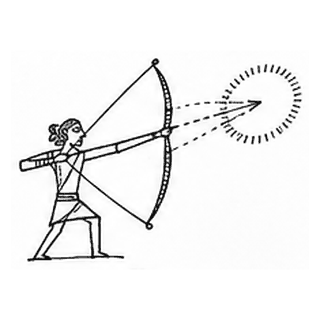
Do the work in front of you; let go of the result.
The teaching
कर्मयोग
5 shlokas below: the Sanskrit, its transliteration, the Trust’s translation in both languages, and the Trust’s note on why the verse is here.
The Gita’s first and most practical teaching is about work. Arjuna wants to walk away from his duty because he fears what it will bring. Krishna does not tell him the fear is wrong; he tells him where to put it down. You have a right to your effort, never to its outcome. Do what is yours to do, fully, and leave the fruit.
This is not indifference. Karma Yoga asks for more effort, not less — effort no longer poisoned by anxiety about reward or blame. The Gita says such work purifies the one who does it, and that a person who acts this way “attains the Supreme”.
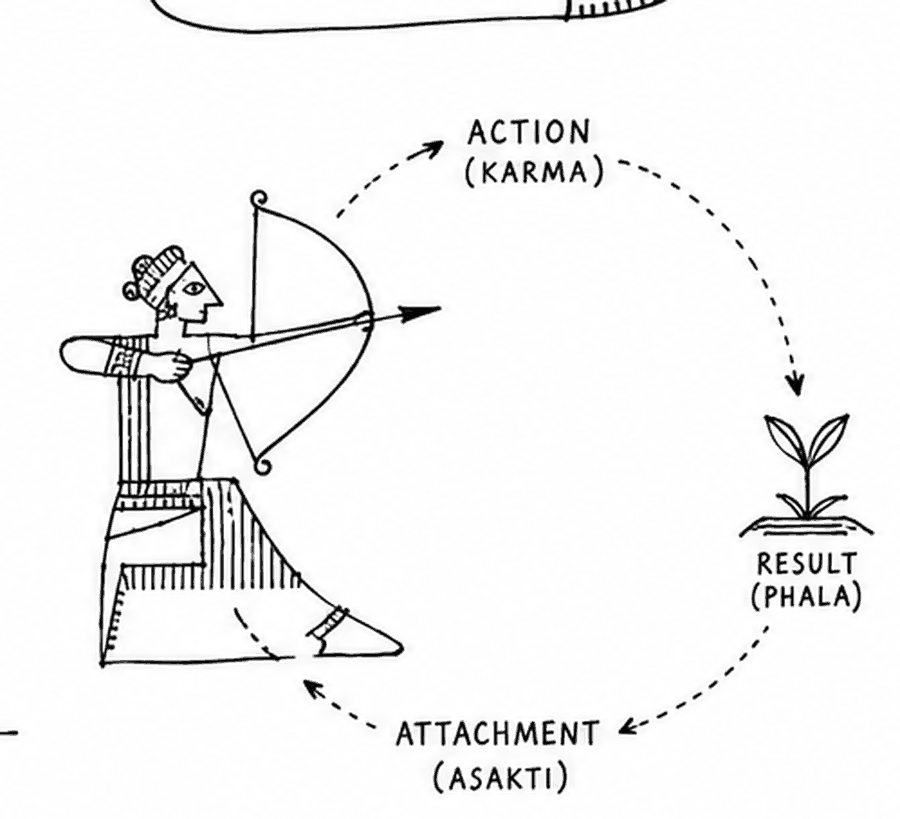
Action, result, attachment, action again. Karma Yoga cuts the loop at one place only — the attachment, never the action.
Every service at the Bhawan — darshan, satsang, the gardens, the guest house — is offered without charge and without expectation. The Deed does not require that; the Trust has simply never done it any other way.
At the Bhawan
The shlokas
In the Gita’s own words.
Bhagavad Gita 2.47
कर्मण्येवाधिकारस्ते मा फलेषु कदाचन । मा कर्मफलहेतुर्भूर्मा ते सङ्गोऽस्त्वकर्मणि ॥
karmaṇyevādhikāraste mā phaleṣu kadācana / mā karmaphalaheturbhūrmā te saṅgo’stvakarmaṇi
Shri Bhagavan
Your right is to action alone, never to its fruits.
Your right is to the action alone, never to its fruits. Do not let the fruit be your reason for acting, and do not be attached to inaction either.
हिंदी · तुम्हारा अधिकार केवल कर्म में है, उसके फलों में कभी नहीं। फल को कर्म का कारण मत बनाओ, और अकर्म में भी आसक्त मत हो।
The Trust’s reading · Do not let the reward be the reason you act — and do not let the fear of losing it push you into doing nothing. Work sincerely; leave the outcome.
yogasthaḥ kuru karmāṇi saṅgaṁ tyaktvā dhanañjaya / siddhyasiddhyoḥ samo bhūtvā samatvaṁ yoga ucyate
Shri Bhagavan
Evenness of mind is called yoga.
Do your work standing in yoga, Dhananjaya, letting attachment go, the same whether it succeeds or fails. That evenness is what yoga means.
हिंदी · हे धनंजय, योग में स्थित होकर, आसक्ति छोड़कर कर्म करो — सिद्धि और असिद्धि में समान रहकर। यही समता योग कहलाती है।
The Trust’s reading · Act while established in yoga, giving up attachment, the same in success and failure. Balance — not withdrawal from the world — is what the Gita means by yoga.
One joined to this understanding leaves behind both good deeds and bad, here in this life. So take up yoga. Yoga is skill in action.
हिंदी · इस बुद्धि से युक्त पुरुष इसी जीवन में पुण्य और पाप दोनों को छोड़ देता है। इसलिए योग में लगो। कर्मों में कुशलता ही योग है।
The Trust’s reading · One whose mind is steady is freed, even here, from both good and bad results. So devote yourself to yoga: the real skill in work is to do it without being bound by it.
Acting without attachment, a person reaches the Supreme.
So do the work that must be done, always, without attachment. Acting without attachment, a person reaches what is highest.
हिंदी · इसलिए आसक्ति छोड़कर सदा वही कर्म करो जो करना चाहिए। आसक्ति के बिना कर्म करता हुआ मनुष्य परम पद को प्राप्त कर लेता है।
The Trust’s reading · Therefore always do what should be done, without attachment. It is not by leaving work but by working without clinging that one reaches the highest.
It is the opening of Gita 2.47: “Your right is to action alone, never to its fruits.” Krishna tells Arjuna to focus entirely on doing his duty well and to give up both craving for the result and the temptation to avoid action out of fear.
Does Karma Yoga mean not caring about results?
No. It means not making the result the reason you work, and not letting anxiety about it weaken the work. You still plan and aim; you simply do not tie your peace of mind to the outcome.